
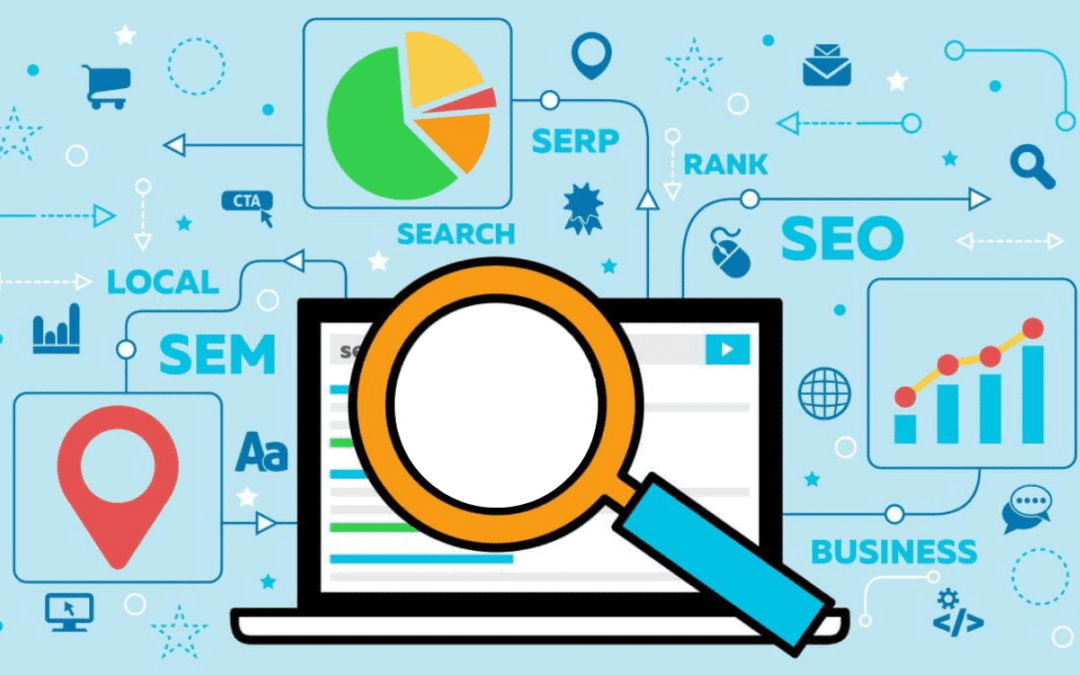
What is SEO and why is it importment
The importance of Search Engine Optimisation (SEO) as a digital marketing technique has undoubtedly been stressed a hundred times over. But are you actually familiar with SEO? Even if you have a fundamental comprehension of what it comprises, you might not fully understand this intricate and diverse process.
Understanding the various components that make-up SEO and how they interact is essential to comprehending why SEO is so significant. In other words, SEO is essential because it increases the visibility of your website, which results in increased traffic and the opportunity to convert visitors into paying clients.
Additionally, it’s a useful tool for promoting your business, growing relationships with customers, and establishing your authority as a subject-matter expert. Here is all the information you need to succeed in the modern digital world, including what SEO is and why it’s important.
The Essentials of SEO Marketing
Keywords
The time when keywords were the only SEO strategy that mattered is long gone, but that doesn’t mean they aren’t still essential. Today, however, for keywords to be effective in your content, they must be thoroughly studied, selected, and used sparingly.
But what precisely are keywords? Prospects search for information online using keywords, which firms may utilise to reach out to people who are interested in their goods and services.
When performing the essential steps of keyword research, it’s crucial to look for terms with high search volumes and low levels of competition. You should also pick short-tail, long-tail, and local keywords to incorporate into your content, such as “puppies for sale in London,” “dog,” and “terrier puppies for sale.” You should have secondary and tertiary keywords in addition to your primary or seed keyword because they will still be useful to your firm. Last but not least, incorporate keywords into all of your titles, URLs, and other on-page SEO components (more on that later…)
Content
Since content is the means by which you reach and interact with people, it plays a crucial role in SEO. It’s crucial to understand your angle and create content that works.
For example, if you had a nursery and wanted to boost your visibility, you would write a number of blogs about gardening, picking the best plant species, growth advice, and other topics. Your blog would show up when someone searched for gardening knowledge, and you could establish a relationship with that prospect by giving them useful information. The idea is that you would be the first nursery that sprang to mind if that prospect needed to buy something, like a plant.
Today’s material must be instructive while also being entertaining, timely, and shareable. Content can take many different forms, including:
-
Content on a website
-
Videos
-
Blogs
-
Infographics
-
Podcasts
-
Listicles
-
How-to guides
-
E-books and whitepapers
-
posts on social media
-
Local Listings
SEO off-page
Off-page SEO refers to external optimisation techniques used outside of your website.
Building excellent backlinks to your site from other websites informs search engines that your site is important and high-quality, which helps to establish authority. Backlink building is the primary approach used for off-page SEO.
Backlink-building strategies come in a variety of forms, but some of the more effective techniques right now include guest blogging, producing a lot of infographics that will be widely shared, and utilising influencer marketing in your content.
Local SEO
Local SEO is becoming more and more crucial as more people search on their mobile devices. Nowadays, mobile devices are used for 60% of all searches, and roughly 50% of those queries have a local intent.
Let’s assume you run a restaurant. Local SEO would make sure that when locals searched for the top eateries in town, they found your website.
The creation of location-specific pages for your website, claiming directory listings, and developing business pages on Google My Business local directories and Google Maps are all examples of local SEO best practices in addition to leveraging local keywords.
Online Advertising
Paid marketing initiatives are referred to as search engine marketing (SEM), and they include things like display ads, native ads, Google AdWords, social media ads, pay-per-click (PPC), Google shopping ads, and more.
SEM can help you reach new, highly targeted audiences, even though it isn’t usually a major part of a full SEO plan. Additionally, you can coordinate your SEO and SEM efforts.
SEM advertising activities examples include:
-
Targeted and paid campaigns
-
Copy that uses keywords and is tailored to your company or product
-
Click-through rates (CTR) and cost per click are examples of performance indicators (CPC)
-
Knowing the Value of SEO for Contemporary Businesses
Rankings and Visibility
Increasing visibility, or making it simpler for prospects to find you when they search for anything you have to offer, is one of the most crucial SEO duties. Your rating has a direct impact on your visibility.
It’s important to raise your organic page ranking since the higher you appear on a search engine result page (SERP), the more probable it is that potential customers will see you and click through to your website. Your ranking and visibility will improve the more effective your SEO efforts, which is especially crucial given that a quarter of web users never scroll past the first SERP.
Web traffic
One of the key objectives of SEO is to increase online traffic, and you can improve traffic by improving visibility and ranks. Think about this for a moment: going up just one spot in the search results can raise CTR by an astounding 30.8%. The #1 spot on a Google search receives roughly 32% of clicks.
The “Featured Snippet,” also known as position #0 as it shows above the top-ranked URL, is the holy grail for many marketers. This type of content, which is typically extracted from a blog’s landing page and provides a solution to a common query, can significantly increase your organic click-through rates.
Therefore, if you want more people to discover your website through a search engine, you should employ SEO strategies that will place you among the top five spots, ideally at the top.
Authority
Page Authority (PA) is becoming more significant to web users as well as search engines. In essence, authority denotes that your website is reliable, of a high standard, pertinent, and has something to provide.
The higher your score, which ranges from 1 to 100, the more authority your site has. While it’s challenging to change your PA rating, you may find it utilising tools like Moz. Many SEO professionals think it has to do with your link profile, or getting external links from reputable and popular sources.
Increasing Visitor Satisfaction
Another reason SEO is essential is that all the effort you spend creating excellent content and optimising it for search engines on your website makes it more user-friendly. A seamless and satisfying consumer experience is produced as a result.
For instance, if you make your website responsive, both laptop and desktop users and mobile visitors would be able to use it. Similarly to this, speeding up page loads will lower bounce rates and encourage users to stay on your site longer. Customers anticipate that a website will load as rapidly as possible, with a three-second maximum! The higher the bounce rate and the lower your conversions, the longer it takes for the page to load.
Keep in Mind That Search Engines Can Fail
Because search engines aren’t perfect, SEO is crucial. Your website will suffer if you don’t take action to address its flaws.
For instance, improper link structure may prevent search engines from correctly crawling and indexing a site, which could result in worse ranks. No matter how much time you invest in other SEO strategies, coding problems can completely block search engines, preventing your site from ranking. Other typical issues that search engines may encounter include:
-
Duplicate pages
-
Forms
-
Audio, video, and other non-textual information, as well as images,
-
Semantics and Language
If all this seems totally overwhelming, then we at Camden SEO can take this all off your hands and let us run your SEO strategy. Email us at hello@camden-seo.co.uk and let’s see how we can help.